
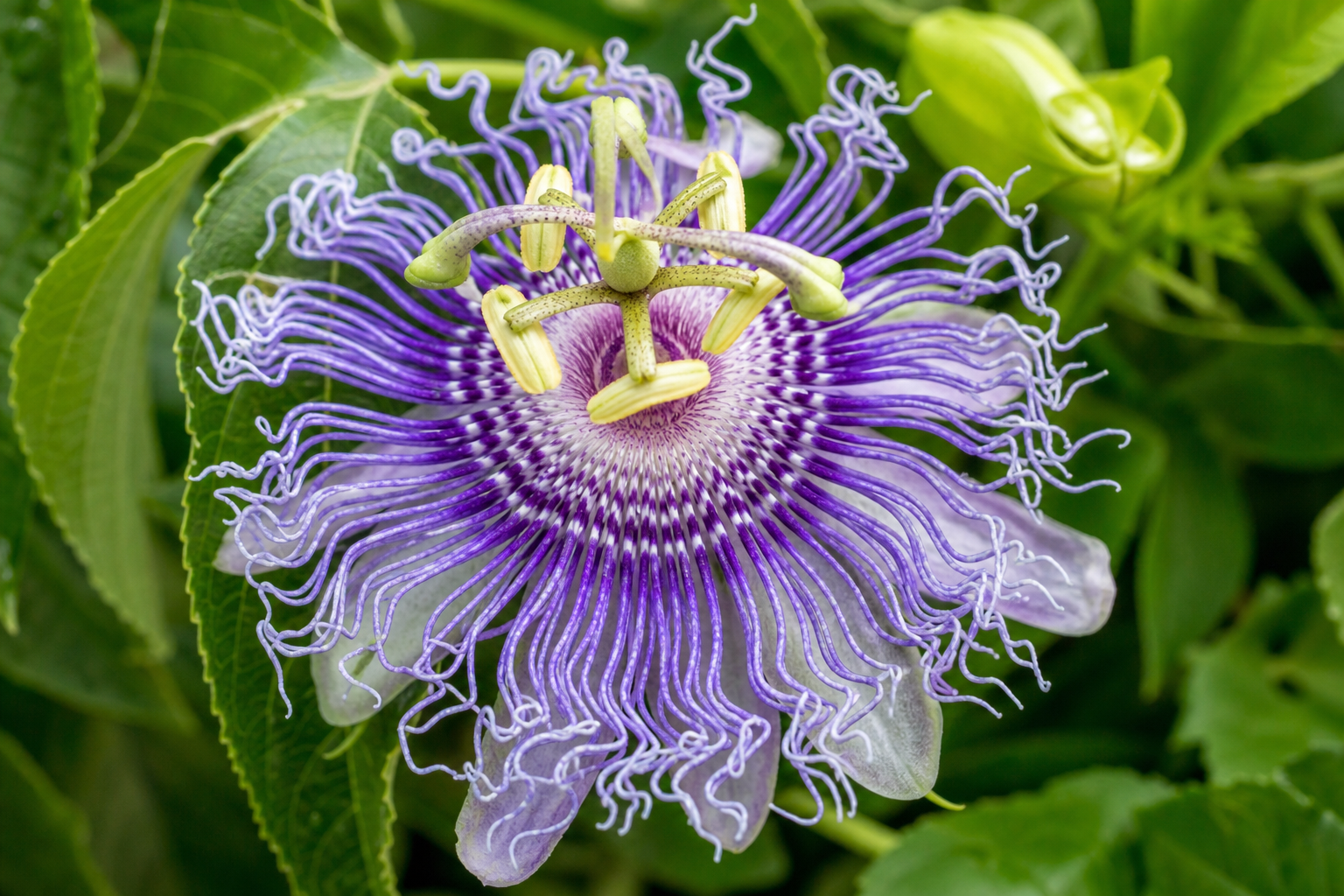
An Old Remedy for a Very Modern Problem
Long before “nootropic” was a word anyone used, passionflower (Passiflora incarnata) was already a staple of traditional herbal medicine. Indigenous peoples of the Americas used it to ease restlessness and support sleep, and European settlers carried the practice forward, eventually bringing the plant into 19th-century pharmacopeias as a remedy for nervousness, insomnia, and what herbalists once called “nervous exhaustion.”
Its striking, otherworldly flower gave it a name rooted in Christian symbolism, but its reputation was built on something far more practical: a gentle, reliable calming effect that didn’t come with the heavy sedation of stronger remedies. That reputation persists today, and it’s exactly why passionflower has found a second life in conversations about cognitive support — not as a stimulant that sharpens the mind, but as a calming ally that clears the mental static standing in the way of focus.
Calm First, Clarity Second
It’s worth being honest about what passionflower is — and isn’t. It’s not a stimulating nootropic in the way caffeine or ginkgo are sometimes framed. Passionflower doesn’t rev up mental energy. Its strength lies in the opposite direction: quieting the anxious mental chatter that makes it hard to think clearly in the first place.
Research suggests passionflower may influence levels of gamma-aminobutyric acid (GABA) in the brain, the body’s primary calming neurotransmitter. GABA works by dampening excessive neural activity, which is part of why healthy GABA activity is associated with a settled, steady mental state rather than a racing or scattered one. Some studies on passionflower extract point to this GABA-related activity as a plausible mechanism behind its traditional use for anxiety and sleep.
The practical takeaway: when anxious thoughts quiet down, the mind has more room to focus. Passionflower’s “nootropic” benefit isn’t sharpening cognition directly — it’s clearing the noise that gets in cognition’s way.
What the Research Points To
A handful of clinical studies have looked at passionflower specifically for anxiety, with encouraging results. In one frequently cited trial, passionflower extract performed comparably to a prescription anti-anxiety medication for patients preparing for surgery, while causing less impairment in job performance — a meaningful finding, since many conventional calming agents come at the cost of alertness. Other small trials have explored its use for generalized anxiety symptoms and pre-procedural anxiety, generally reporting reduced anxiety scores with good tolerability.
Sleep research on passionflower, often in the form of a mild-tasting tea, has also shown modest improvements in subjective sleep quality. This matters for cognitive function more than it might seem: sleep is when the brain consolidates memory and clears metabolic waste, so anything that gently supports better rest is, indirectly, supporting the mind.
Where Passionflower Can Help
Quieting Anxious Mental Noise
By supporting calming GABA activity, passionflower may help ease the restless, looping thoughts that make it hard to concentrate or think clearly.
Better Sleep Quality
Traditional and clinical use both point to improved rest, which in turn supports the memory and focus benefits that only come with good sleep.
Gentle, Non-Sedating Support
Unlike stronger sedative herbs or medications, passionflower is generally associated with a soft calming effect rather than heavy drowsiness or next-day grogginess.
Everyday Nervous System Support
As a traditional nervine, passionflower has long been used simply to help the nervous system feel less “wound up” during ordinary daily stress.
Ways to Take It
Passionflower is widely available and easy to work into a daily routine:
- Tea: The most traditional form, often taken in the evening or during a stressful stretch of the day. A mild, slightly grassy flavor makes it easy to sip.
- Tincture: A concentrated liquid extract, useful for more precise, flexible dosing.
- Capsules: A convenient, tasteless option for anyone who prefers a standardized dose without preparation.
A Few Safety Notes
Passionflower is generally well tolerated, but it’s not without considerations:
- Sedative interactions: Because passionflower has calming properties, combining it with sedatives, sleep medications, or alcohol may amplify drowsiness.
- Pregnancy: Passionflower is not recommended during pregnancy, as it has historically been associated with uterine-stimulating effects.
- Medication interactions: As with any herb that affects the nervous system, it’s wise to check with a healthcare provider before combining passionflower with prescription medications, particularly other anxiety or sleep treatments.
As always, working with a qualified practitioner can help determine whether passionflower is a good fit for your body and your current wellness picture.
Passionflower is a reminder that clarity of mind doesn’t always come from adding more stimulation — sometimes it comes from quieting the noise. For a nervous system that’s overworked and overstimulated, that kind of gentle calm may be exactly what supports clearer thinking.
This article is for educational purposes and is not intended as medical advice, diagnosis, or treatment. Please consult a qualified healthcare provider before starting any new herbal supplement, especially if you are pregnant, nursing, or taking other medications.