
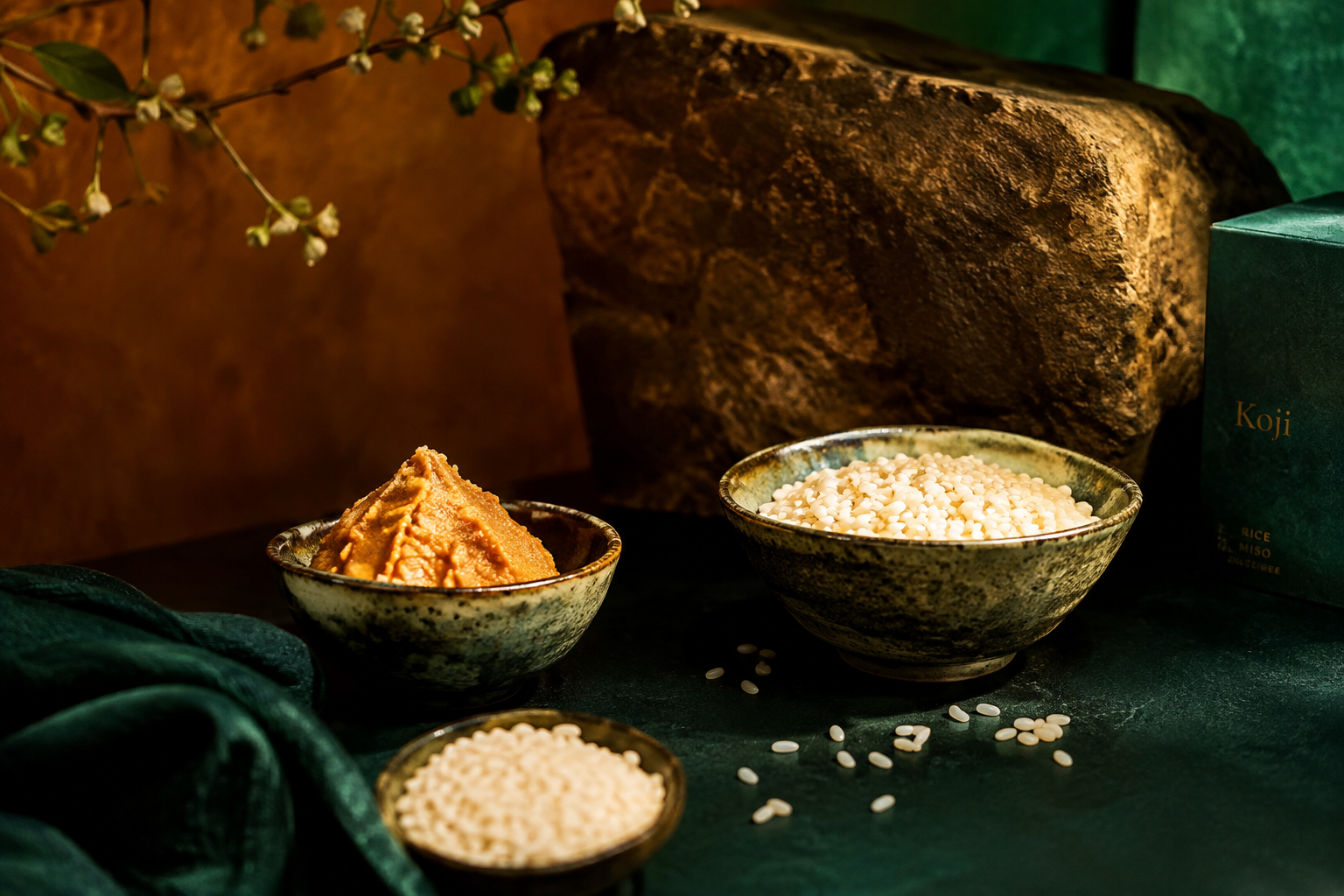
What Koji Actually Is
Koji is a mold, Aspergillus oryzae, cultivated on rice, soybeans, or barley for centuries across Japanese and East Asian food traditions. On its own, that might not sound appetizing — but koji is the quiet engine behind miso, soy sauce, sake, and mirin. When koji is introduced to cooked soybeans and left to ferment over weeks or months, it produces miso: a salty, umami-rich paste that’s as much a fermentation project as it is a seasoning.
The fermentation process is what makes miso worth paying attention to beyond flavor. Koji’s enzymes break down proteins, starches, and fats into simpler compounds, which is part of why fermented foods often sit more easily in the gut than their unfermented starting ingredients.
Why Fermented Foods Matter for Digestion
- Live cultures — Traditionally fermented, unpasteurized miso carries beneficial bacteria and yeasts that can contribute to a more diverse gut microbiome, which research increasingly links to better digestion, immune function, and even mood regulation.
- Active enzymes — Koji produces enzymes like amylase and protease that pre-digest starches and proteins before they ever reach your gut, which may ease the digestive load for people who feel heavy or bloated after certain meals.
- Easier nutrient access — Fermentation can make minerals and amino acids in soybeans more bioavailable, meaning your body may absorb more of what’s already there.
- Gut-brain connection — A healthy, diverse gut microbiome is increasingly understood to communicate with the nervous system, which is one reason naturopathic practice treats gut health as foundational rather than incidental.
A Note on “Probiotic” Claims
It’s worth being precise here: most miso sold in the U.S. is pasteurized during processing, which deactivates the live cultures (though the beneficial enzymes and fermentation byproducts remain). If live cultures matter to you specifically, look for unpasteurized, refrigerated miso — usually labeled as such — rather than the shelf-stable kind.
Simple Ways to Bring Koji Miso Into Your Week
- ✔ Stir a spoonful into warm (not boiling) water for a quick, grounding broth — high heat can damage delicate enzymes and beneficial compounds
- ✔ Whisk into salad dressings for an umami base instead of relying on salt alone
- ✔ Use as a marinade for vegetables or fish — the enzymes gently tenderize while adding depth
- ✔ Add at the very end of cooking soups and stews, off the heat, to preserve more of its living qualities
- ✔ Pair with other fermented staples — kimchi, sauerkraut, or kefir — for a more varied microbiome-supporting plate
Choosing a Quality Miso
Not all miso is created equal. Look for:
- Short ingredient lists — traditionally just soybeans, koji, salt, and water
- Organic, non-GMO soybeans when possible
- Refrigerated, unpasteurized varieties if live cultures are a priority
- Longer fermentation times (noted on some labels), which tend to produce deeper flavor and more developed enzymatic activity
A Small Ritual With a Long History
There’s something grounding about incorporating a food with this much history into a modern routine — a reminder that supporting your gut doesn’t always require a supplement bottle. Sometimes it’s a centuries-old paste stirred into warm water, eaten slowly, the way it always has been.
If digestion has felt off for a while — bloating, irregularity, low energy after meals — a bioenergetic wellness scan can offer a gentle starting point for understanding where your gastrointestinal system may be carrying stress, so food choices like this one become part of a plan rather than a guess.
This information is intended for general wellness education and is not intended to diagnose, treat, cure, or prevent any disease. If you have a soy allergy or a medical condition affecting digestion, please consult your healthcare provider before making dietary changes.