
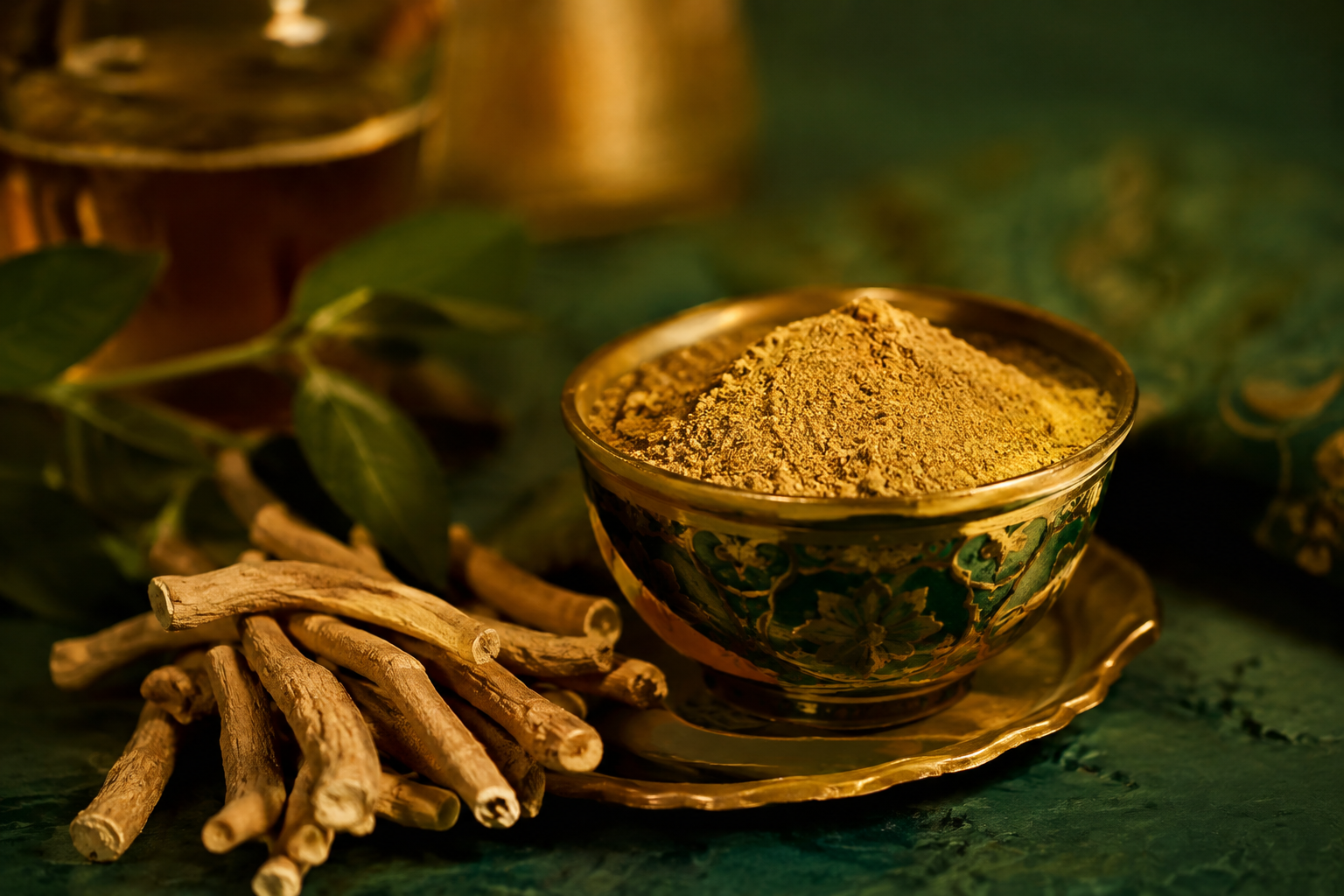
An Old Root, Newly Relevant
Long before “adaptogen” became a wellness buzzword, ashwagandha (Withania somnifera) was a staple of Ayurvedic practice, used for centuries to help the body cope with stress, fatigue, and the general wear of daily life. Today it’s one of the most researched herbs in naturopathic medicine — not because it’s trendy, but because a meaningful body of clinical research keeps circling back to the same themes: stress resilience, steadier energy, and better sleep.
None of that makes it a cure for anything. Ashwagandha is a support, not a replacement for sleep hygiene, nutrition, movement, or medical care. Understanding what it actually does helps you use it the right way, for the right reasons.
What the Research Actually Shows
- Stress and cortisol — Several clinical trials have found that ashwagandha extract is associated with meaningfully lower cortisol levels in people under chronic stress, alongside self-reported improvements in perceived stress and anxiety scores.
- Energy and fatigue — As an adaptogen, ashwagandha is thought to help the body’s stress-response system (the HPA axis) respond more efficiently to demand, rather than providing a stimulant jolt. People often describe this as steadier energy rather than a spike.
- Sleep quality — Research on ashwagandha root extract has shown modest but consistent improvements in sleep onset and overall sleep quality, particularly in people whose sleep is disrupted by stress rather than a separate sleep disorder.
- Thyroid support — Some studies suggest ashwagandha may gently support thyroid hormone levels in people with mild, subclinical thyroid imbalances. This is an area that deserves caution: anyone with a diagnosed thyroid condition, especially hyperthyroidism, should talk to their provider before adding it, since it may shift hormone levels in a direction that isn’t right for every thyroid picture.
- Exercise recovery and strength — A smaller set of studies has looked at ashwagandha’s effect on muscle recovery and strength training outcomes, with some promising but still early results.
How It Seems to Work
Ashwagandha contains compounds called withanolides, believed to help regulate the body’s stress-response pathways rather than sedate or stimulate directly. That’s the heart of what “adaptogen” means — a substance thought to help the body adapt to stress more efficiently, whatever form that stress takes, rather than targeting one single symptom.
Who Tends to Notice It Most
- ✔ Those carrying chronic, low-grade stress — work pressure, caregiving, a demanding season of life
- ✔ People whose sleep is disrupted more by a racing mind than by pain or a diagnosed sleep disorder
- ✔ Anyone whose energy feels “wired but tired” rather than simply low
- ✔ People already supporting their thyroid naturally, under the guidance of a practitioner
A Few Honest Caveats
Ashwagandha is not appropriate for everyone. It’s generally advised to avoid it during pregnancy, and caution is warranted for anyone on thyroid medication, immunosuppressants, or sedatives, since it may interact with how those work. It is also not intended to diagnose, treat, cure, or prevent any disease — including anxiety disorders or thyroid conditions, which deserve proper medical evaluation.
As with any herb, quality and dose matter. Standardized root extract (often concentrated for withanolide content) is what most of the clinical research is based on — not all supplements on a shelf are made the same way.
Bringing It Into a Bigger Picture
At Edenix, we rarely look at one herb in isolation. Chronic stress, poor sleep, and low energy are almost always connected to several systems at once — hormonal, digestive, and nervous. A bioenergetic wellness scan can help clarify where your body is carrying the most stress right now, so that something like ashwagandha is added with intention rather than guesswork.
Supporting your nervous system is rarely about one dramatic fix. It’s usually a handful of small, consistent choices — rest, nourishment, and the right support at the right time.
This information is intended for general wellness education and is not intended to diagnose, treat, cure, or prevent any disease. Please consult your healthcare provider before starting any new supplement, especially if you are pregnant, nursing, or taking thyroid or immune-related medication.